EN
EN


How Seismic Codes Shape Prefabricated House Resilience
IBC and ASCE 7 Requirements for High-Seismic Zones (SDC D–F)
The latest seismic building codes like IBC and ASCE 7 set pretty strict standards for prefabs built in regions prone to earthquakes. Buildings that fall into Seismic Design Categories D through F need to handle sideways forces anywhere from 1.5 to 2 times what's required in areas with lower risk levels. This means construction teams have to reinforce all the connections between components, create unbroken pathways for loads throughout the structure, and use materials that can bend without breaking. According to ASCE 7-22, structures on SDC F sites must meet base shear coefficients ranging from 0.5g to 1.0g, which explains why many engineers now incorporate steel bracing systems or moment frames into their designs. The whole point is to let these prefab units absorb shock through controlled bending rather than sudden failure. We saw this work in practice during Chile's massive 2010 earthquake measuring 8.8 on the Richter scale. Modular buildings that followed the updated codes ended up with under 10% damage overall, proving just how effective these modern requirements actually are when properly implemented.
Why Modern Prefabricated House Designs Often Exceed Code Minimums
Leading manufacturers routinely exceed baseline seismic requirements—not just for compliance, but to enhance resilience, reduce lifecycle risk, and strengthen market positioning. Three interrelated factors drive this trend:
- Insurance incentives: Projects demonstrating 25% above IBC minimums qualify for premium reductions up to 30%, per FEMA P-2078 (2023).
- Supply chain durability: Redundant shear walls and robust foundation tie-downs minimize post-event retrofits, preserving factory throughput and delivery schedules.
- Performance-based design: Advanced modeling enables precise optimization of weight distribution and connection detailing—reducing material use while expanding safety margins. As a result, prefabricated houses in Japan now commonly achieve 150% of code-mandated drift limits, supporting rapid reoccupation after major seismic events.
Key Structural Systems That Enable Prefabricated House Performance at M8
Steel Framing, Diaphragm Continuity, and Redundant Load Paths
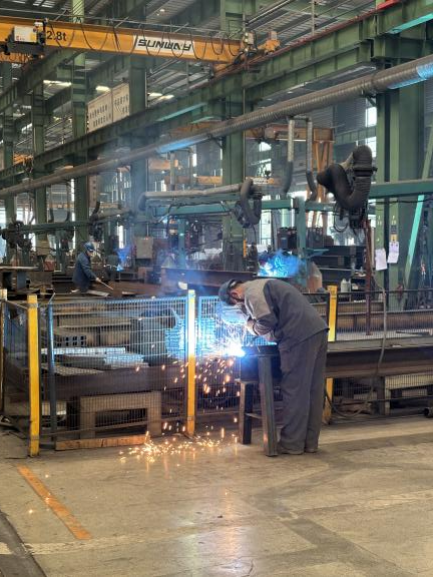
The performance of high seismic resistance in prefabricated houses relies on three main systems working together: steel framing, continuous diaphragms, and those redundant load paths we keep hearing about. Steel frames have this built-in flexibility that lets them handle pretty serious shaking. They can actually drift about 3% between stories without collapsing during major earthquakes. Then there are these continuous diaphragms that basically turn floors and roofs into big flat surfaces. These surfaces spread out the forces from shaking so no single spot gets too stressed. And let's not forget about those redundant load paths. Basically, they create backup routes for forces to travel through the structure. If something breaks or gives way, neighboring parts take over the job. When tested against regular wood framing, these systems perform around 40% better when it comes to how much they move during quakes, even when dealing with those nasty near-fault pulses from magnitude 8 earthquakes. Plus, since everything gets made in factories rather than on site, there's far less variation in quality. No more worrying about inconsistent workmanship caused by different crews or weather issues during construction.
Advanced Connection Detailing: Bolts, Welds, and Moment-Resisting Joints
The way connections are engineered plays a critical role in how well prefabricated buildings withstand earthquakes. High strength bolts paired with those Belleville washers help keep everything tightly connected even after multiple quakes shake things up. Steel joints welded all the way through reduce the risk of sudden cracks forming when stress builds up. Moment Resisting Frames or MRFs have joints designed specifically for this purpose often including parts that give way intentionally during shaking events. These special joints absorb shock by bending in controlled ways instead of breaking completely. Testing protocols require these connections to survive over twenty cycles at around 2.5% drift between floors. Looking at what happened during Chile's big 2010 earthquake gives us real world proof too. Buildings constructed with these advanced connection techniques had just 15% as many joint failures compared to regular constructions nearby. Good connection design turns what would otherwise be stiff structures into something that can actually move with seismic forces rather than fighting against them and collapsing under pressure.
Real-World Evidence: What Post-M8 Field Studies Reveal About Prefabricated House Survival
Case Studies of Intact vs. Failed Prefabricated House Units in Japan and Chile
Looking at what happens on the ground after major earthquakes above magnitude 8 shows just how much building design matters when lives are at stake. Take Chile's big quake in 2010 (magnitude 8.8). Steel buildings made with proper load paths had fewer than 18% failures overall. But buildings with poor connections or broken diaphragms collapsed three times more often. The same story played out in Japan during the massive Tohoku earthquake in 2011 (magnitude 9.0). Buildings with strong joints kept working fine, while those with weak welds partially collapsed. What made all the difference? How well these structures could absorb and spread out energy during shaking. Buildings built with flexible materials and joints designed to handle stress simply survived better than their rigid counterparts in both disasters.
Nonstructural Damage Patterns and Their Impact on Occupancy Resumption
The ability to bounce back after disasters depends just as much on how well nonstructural elements perform as it does on whether buildings stand firm. Looking at data from prefabs after magnitude 8 earthquakes shows something interesting: around 70 percent of houses deemed temporarily uninhabitable actually had no serious structural problems. What made them unsafe? Mostly things like partition walls falling out of place (about 42 cases), damaged utility lines running through walls (seen in roughly a third), and furniture crashing down from shelves (around 25 instances). When builders included those special earthquake restraints for pipes, ventilation ducts, ceiling grids, and even built-in cabinets, people could move back in 65% quicker than usual. Makes sense really. Proper attention to all those little systems behind the walls cuts down waiting time after quakes by almost a month sometimes. Instead of just meeting minimum codes, this approach turns ordinary compliant buildings into places people can call home again within days rather than weeks.